

Echidna Encounter
Nature's Quiet Wanderer

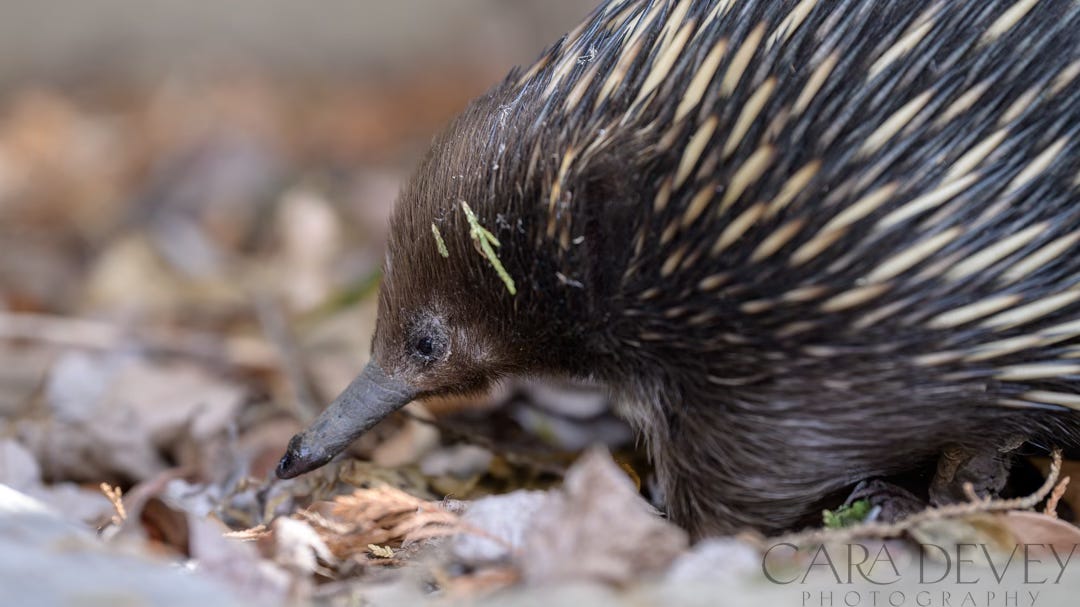
It was back in October 2021 when I finally encountered a wild echidna. I would love to tell you that my extensive research into echidna habitats and my collaboration with local wildlife conservation officers had led me to this moment. I knew my subject well (one of the first rules for a photographer), but it simply wasn’t the case.
I’m sure you all remember the world being forced into a sort of semi-slumber in 2020 and 2021. The cause being the rapid progression of COVID into a global pandemic. I say “for some of us” because I know if you’re in the medical profession or another essential field, it was the complete opposite of a slumber.
Like every parent, I found myself at home with a few new job descriptions. I became the head teacher of my own school and had the opportunity to become the families senior stylist. I even became our dog’s groomer. While my salon customers grumbled, obviously unsatisfied with the results, our cheerful cocker spaniel was always happy. I concluded that the salon customers were the problem, not the hairdresser.
It was a new normal school day in our house. My youngest, bleary-eyed child sat at the kitchen table while my older boys attended online classes. I was resolving the usual conflict between the computer and printer, which often escalated to the point of them not talking to each other. From the upstairs window, while I waited for some sign that my resolution efforts had been successful, I noticed the little creature snuffling and bimbling its way up our driveway.
We, like just about everyone else on the planet, weren’t receiving visitors, but this one was most welcome.
I quickly abandoned the printer and descended the stairs to retrieve my camera equipment. Fortunately, my 70-200mm lens was attached to my camera, which would be ideal for this close encounter. As the echidna’s snout scanned the ground, it was evident that she was on a mission to find termites. I managed to lie down and capture her while she diligently searched. Being at eye level enhances the intimacy of the photograph, even though my elbows dislike being poked into solid concrete and I occasionally receive a few nips from angry ants.
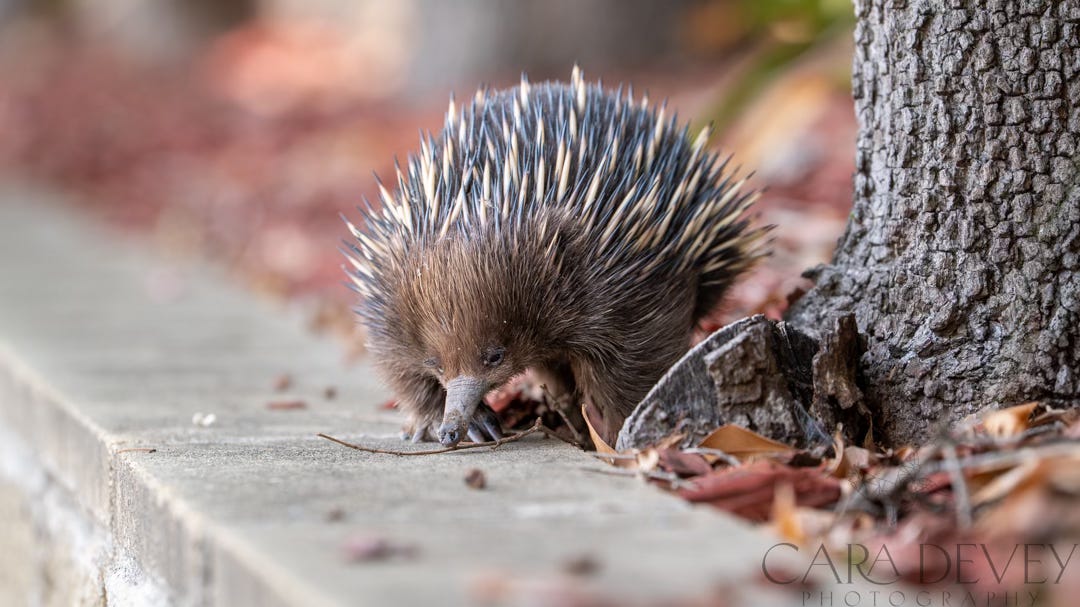
My son arrived outside, curious about the missing documents I had intended to print. We sat on the drive for a while, savoring this unexpected moment. Later, we conducted some research and discovered that echidnas are quite common in Australia, yet people rarely encounter them. Baby echidna’s are called puggles and they stay within their den until they’re about a year old. I’ve heard from fellow bushcare volunteers about a group residing along the creek that runs along the bottom of our estate, although I’ve never had the chance to see them.
Photographers often emphasize that wildlife photography isn’t solely dependent on luck. It requires thorough research, meticulous planning, and a deep understanding of the species and its habitat. While I wholeheartedly agree with these principles, they are also one of the reasons why I’ve become so passionate about conservation. To protect our wildlife, we must first safeguard their habitats. However, when it comes to photography, I can’t help but think that a touch of luck is essential.
I have a couple more images from this encounter in my wildlife gallery here
Until next time
Cara x
Loved this, Cara! I was surprised by how small hedgehogs are when I first saw one in England. He lived in my garden and liked rustling through the autumn leaves, so I named him Russell. Your echidna encounter brought that memory back so vividly. Thank you for sharing this moment of quiet magic. 💫